George and Beth
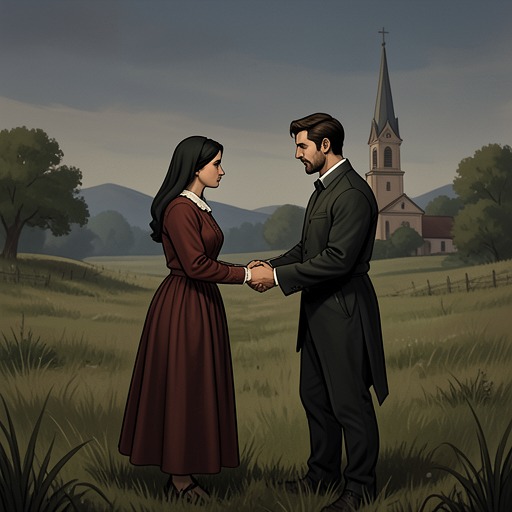
Three Bags FullGeorge and Beth’s relationship began as a childhood connection at the village school, not as family or romance. As Beth recalls it, George laughed at her, yet she continued to care about him and to hope for him; after his death, that attachment shaped both her account of his life and her effort to speak openly about his killing.
Childhood Connection and Distance
Beth makes the limits of their relationship clear when Rebecca asks whether George was a relative or boyfriend: they were neither, but had attended the village school together. She describes him as someone who laughed at her, while also saying that she had never given up hope for him. Their bond is therefore presented less through shared intimacy than through Beth’s sustained concern for a former schoolmate who did not appear to take her seriously.
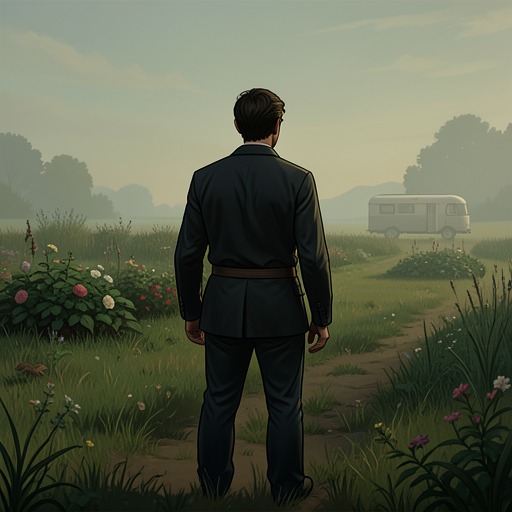
That imbalance persists in Beth’s memory of a possible warning. She had found an object on the steps of George’s caravan one morning the week before his death. Because children had called him the Goblin King, she assumed it was a prank and took it away rather than troubling him with it. After George was killed, she reinterpreted the object as a warning and felt responsible for failing to pass it on. Even then, she acknowledged that he probably would not have listened: in her experience, George never listened to warnings.
Beth’s Account of His Death
Beth’s concern extends beyond private regret. She tells Rebecca that she was the only person in the village to speak to the police about George’s death, and fears that the community will be suffocated by its silence. According to what the police told her, George was poisoned first and fell asleep peacefully; the spade was used only after he was already dead. Beth remains preoccupied with why he was killed, even as she believes the investigators from town may not consider that question important.
Her account also shows how she makes sense of the murder through religious belief. Beth imagines George’s soul beside his body after the stabbing and invokes a superstition that the Devil’s hounds wait near the dead to swallow a soul. She believes Glennkill cannot live again until the person she calls the black sheep has left the flock. This conviction gives her grief a communal dimension: she sees the unresolved killing not only as George’s terrible death but as a source of spiritual and social damage to the village.
George’s Attempts to Leave
Beth cannot explain what George did during his increasingly frequent absences. She remembers that he dressed well when he went away, wearing a suit and white shirt and looking ten years younger. Although people talked about these trips, she rejected their speculation and guessed that he went to Dublin, to offices and banks, because he wanted to get away from Glennkill.
When Rebecca asks whether someone did not want George to leave, Beth nods. The exchange supports her agreement that his departure was opposed, but does not identify who opposed it or why. Her account thus leaves a significant uncertainty intact: Beth had watched George prepare for a life beyond the village, but neither knew the purpose of his journeys nor managed to intervene before his death.